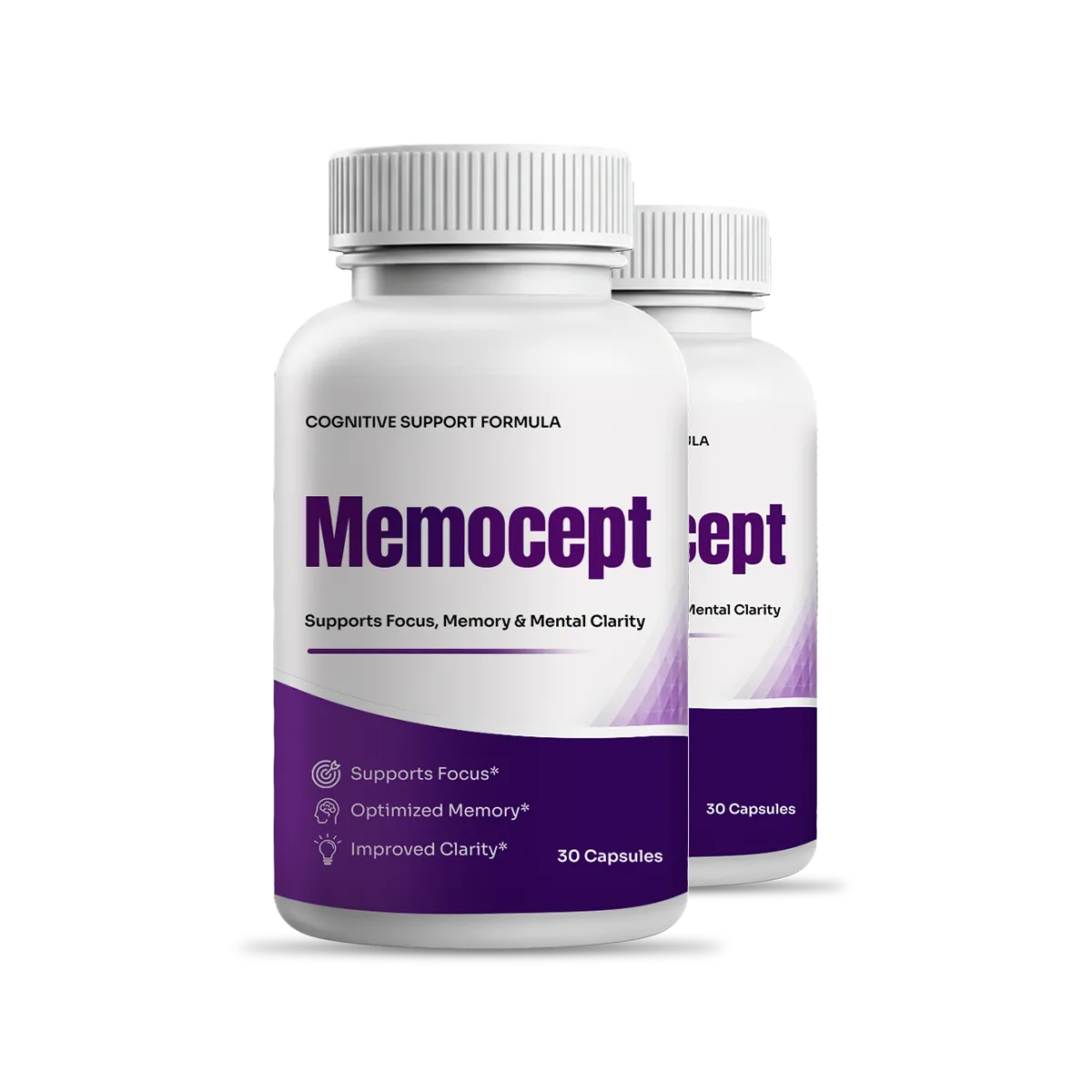
Memocept side effects are the first thing most people search for before buying, and the honest answer is reassuring, with one sensible precaution. At its label dose of one capsule a day, Memocept is a low-stimulant nitric-oxide formula, so dramatic reactions are unlikely and no widespread adverse reports exist. The genuine risk is not a side effect at all but an interaction: two of its ingredients, L-arginine and L-citrulline, can lower blood pressure, which matters if you take blood pressure, heart, or erectile-dysfunction medication. The label itself tells specific groups to check with a doctor first.
Here is the short version:
- No caffeine and no stimulants, and no widely reported side effects at the one-capsule daily dose.
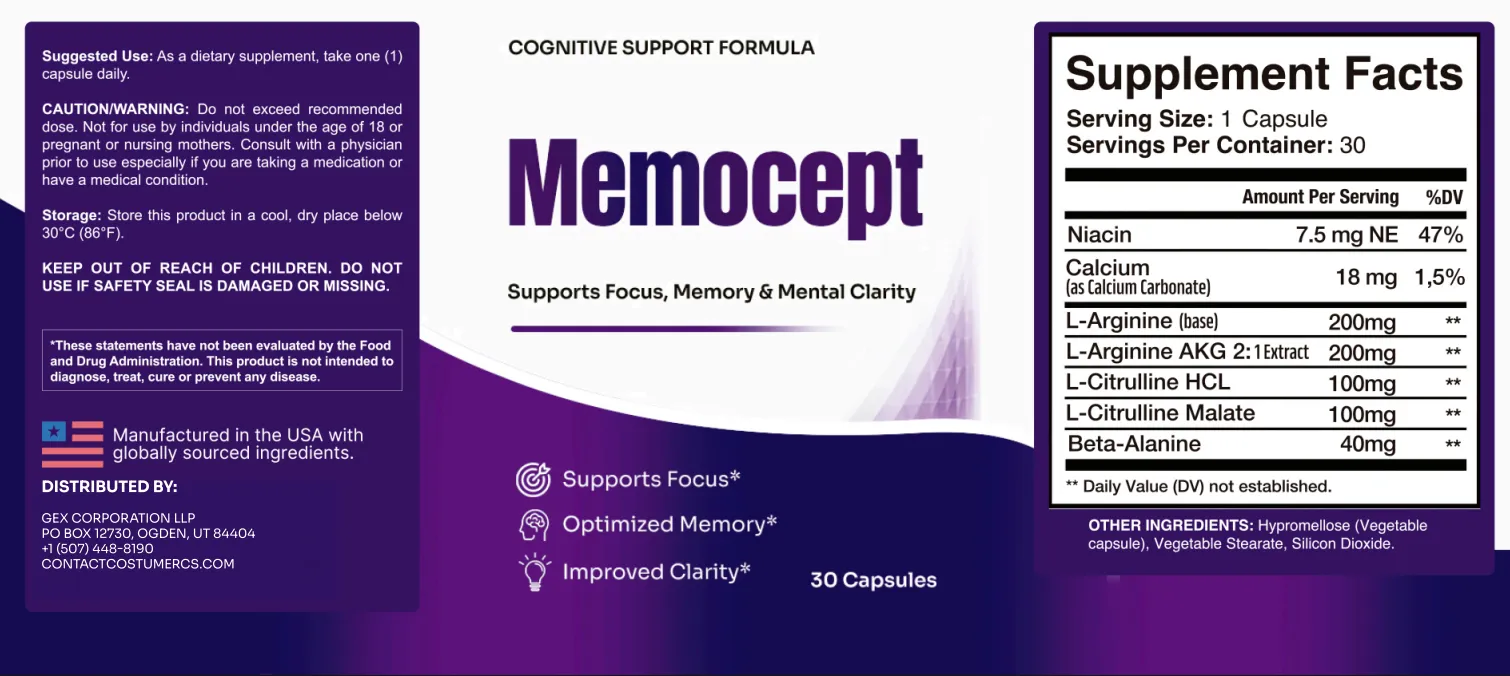
- The formula uses gentle, well-tolerated amounts: L-arginine ~400 mg (two forms), L-citrulline ~200 mg (two forms), niacin 7.5 mg NE, beta-alanine 40 mg. So the supplement complaints people expect, like the niacin flush or beta-alanine tingling, do not apply here.
- The real concern is a blood-pressure interaction with certain prescription drugs.
- The label warns against use by anyone under 18, women who are pregnant or nursing, and people on medication without medical advice.
What side effects does Memocept have?
Memocept has no documented side effects at its label dose, and its formula sidesteps the usual culprits. It carries no caffeine or stimulants, so jitters, insomnia, and a racing heart are not on the table. The effects that are biologically plausible come from the vasodilator ingredients, and in healthy adults they tend to be mild and short-lived.
Because L-arginine and L-citrulline raise nitric oxide and widen blood vessels, the most likely mild reactions are a brief drop in blood pressure, lightheadedness, or a mild headache, the same reason some people feel a "flush" of warmth from any nitric-oxide product. Arginine taken on an empty stomach can cause loose stools or mild stomach upset in some people, a known effect of the amino acid rather than a Memocept-specific report; taking the capsule with food usually settles that.
Two reactions people wrongly expect from the ingredient list do not fit these doses. Beta-alanine can cause a harmless skin tingling called paresthesia, but that shows up at the gram-scale servings used in pre-workout powders, not at the 40 mg inside Memocept. The niacin flush is real too, yet it takes doses many times the 7.5 mg NE here to trigger it, so it is not a Memocept effect. This is the kind of precision worth checking before you assume a supplement will bother you.
This page is about safety; for a compound-by-compound look at what each ingredient does and the research behind it, see the Memocept ingredients label.
Memocept and blood pressure: the interaction that matters most
Yes, Memocept can interact with blood pressure medication, and this is the one caveat worth taking seriously. L-arginine is a direct precursor to nitric oxide, and infusion studies show how strongly it can dilate blood vessels, enough to widen cerebral vessels and raise brain blood flow by roughly 9.5% (PMID 9119904), the same vasodilation that can pull blood pressure down. L-citrulline converts into arginine and sustains that nitric-oxide signal, which is why it is studied for circulation and blood-pressure support (PMID 28336910).
That vasodilation is the point of the formula (better blood flow to the brain), but it also means the ingredients push blood pressure in the same direction as several drug classes. Stacking Memocept with an antihypertensive (a prescription blood-pressure pill), a nitrate such as nitroglycerin, or an erectile-dysfunction drug like sildenafil or tadalafil can compound the drop and cause dizziness or fainting. If you already run low blood pressure, the same math applies.
The same logic extends beyond prescriptions. Stacking Memocept with other nitric-oxide or "circulation" supplements (separate arginine, citrulline, or beetroot products) pushes the same lever twice, and heavy alcohol on the same day can add its own blood-pressure dip. Keeping to one source of these compounds is the simple way to stay predictable.
Because Memocept uses gentle, everyday amounts of these compounds, most healthy adults tolerate the formula easily. Drug interactions, though, work differently from dose-dependent side effects, so anyone on cardiovascular medication, or scheduling surgery, should clear Memocept with their doctor first.
Warnings on the Memocept label
The Memocept label carries the standard supplement cautions, and they are specific enough to act on. It advises that the product is not for anyone under 18, is not for women who are pregnant or nursing, and that people taking medication or managing a health condition should consult a physician before use. It also states that the product is a dietary supplement and that its statements have not been evaluated by the FDA; Memocept is not a drug, and it is not a treatment for dementia, memory loss, or any diagnosed condition.
The distributor listed is GEX Corporation LLP in Ogden, Utah. The inactive ingredients are hypromellose (the vegetable capsule), vegetable stearate, and silicon dioxide, flow agents that are inert for nearly everyone, though anyone with a specific excipient sensitivity can scan that list. None of these carry a known side-effect profile at supplement levels.
Our complete Memocept review weighs the formula's effectiveness and everyday value against the safety notes on this page, if you want the full picture before deciding.
Taking Memocept safely day to day
Safe use of Memocept comes down to matching the label and respecting the blood-pressure interaction. Take one capsule per day, with food if your stomach is sensitive to arginine, and do not double up to "catch up" on a missed day. If you monitor your blood pressure, keep an eye on it during the first week, and space the supplement away from any blood-pressure or ED medication until your doctor confirms the combination is fine for you.
Stop and check with a professional if you notice persistent dizziness, an unusual headache, or any reaction that does not fade within a day or two. These are precautions rather than expected outcomes. For a healthy adult not on the interacting drug classes, one capsule a day of this formula is a low-risk routine.
The reassurance here rests on solid ground: the formula is built on well-studied ingredients used at gentle, everyday amounts, with no stimulants to provoke the usual complaints. As with any supplement, it is simply good practice to notice how your own body responds in the first couple of weeks, a routine check, not a reason for concern.
Memocept is sold only through its official website, which backs each order with a 60-day money-back guarantee, so you can stop and return it if the formula does not agree with you. You can review the current terms on the official Memocept website before you commit.
Memocept side effects: frequently asked questions
Is Memocept safe to take daily?
For a healthy adult, one Memocept capsule a day is a low-risk routine, and that is exactly how the label instructs you to use it. The ingredients are dosed at gentle, everyday amounts and the formula has no stimulants, so daily use is not expected to cause problems. "Safe for you" is the real question, though: if you take medication, run low blood pressure, or have a heart condition, daily use should be cleared with your doctor because of the vasodilation effect.
Does Memocept interact with blood pressure medication?
Potentially, yes. Memocept's L-arginine and L-citrulline raise nitric oxide and can lower blood pressure, so combining it with a prescription blood-pressure drug, a nitrate, or an erectile-dysfunction medication can add up to too large a drop. The result can be dizziness or fainting. If you are on any of these, talk to your doctor or pharmacist before starting Memocept.
Who should not take Memocept?
The label says Memocept is not for anyone under 18 or for women who are pregnant or nursing. Beyond that, anyone taking blood-pressure, heart, or erectile-dysfunction medication, anyone with naturally low blood pressure, and anyone scheduled for surgery should get a doctor's sign-off first. Memocept is a cognitive-support supplement, not a treatment for any diagnosed condition, so it is not a substitute for prescribed care.
This article is for informational purposes only and is not medical advice. Statements about Memocept have not been evaluated by the Food and Drug Administration, and the product is not intended to diagnose, treat, cure, or prevent any disease. Talk to your doctor before starting Memocept or any supplement, especially if you take medication or have a health condition.